Platform comparison
| Platform | YES odds | NO odds | Fee | KYC | Settlement | |
|---|---|---|---|---|---|---|
Polymarket (via Polymarket Qué Es) Pick polygram.ink (preferred broker) |
95% | 5% | 0% (USDC on-chain) | No-KYC up to $1,500 | USDC, auto via UMA oracle | See live odds → |
Polymarket (direct) polymarket.com |
95% | 5% | 0% | Geo-blocked in US/UK/EU | USDC, on-chain | See live odds → |
Kalshi kalshi.com |
— | — | Up to 7% per trade | US-only, KYC required | USD | See live odds → |
Betfair Exchange betfair.com |
— | — | 2-5% commission | Full KYC from first trade | GBP / EUR | See live odds → |
Manifold Markets manifold.markets |
— | — | Play-money (mana) | None — play-money | Mana (no cash-out) | See live odds → |
Outcome probabilities
Current market-implied probability for each outcome, from the live order book.
| Outcome | Probability |
|---|---|
| Cleveland Cavaliers | 95% |
| Team A | 50% |
| Team B | 50% |
| Other | 50% |
| Golden State Warriors | 3% |
| New York Knicks | 3% |
| Philadelphia 76ers | 3% |
| San Antonio Spurs | 3% |
| Boston Celtics | 2% |
| Brooklyn Nets | 2% |
| Charlotte Hornets | 2% |
| Chicago Bulls | 2% |
| Dallas Mavericks | 2% |
| Denver Nuggets | 2% |
| Detroit Pistons | 2% |
| Indiana Pacers | 2% |
| Los Angeles Lakers | 2% |
| Memphis Grizzlies | 2% |
| Milwaukee Bucks | 2% |
| Minnesota Timberwolves | 2% |
| New Orleans Pelicans | 2% |
| Oklahoma City Thunder | 2% |
| Orlando Magic | 2% |
| Phoenix Suns | 2% |
| Portland Trail Blazers | 2% |
| Toronto Raptors | 2% |
| Utah Jazz | 2% |
| Washington Wizards | 2% |
| Atlanta Hawks | 1% |
| Houston Rockets | 1% |
| LA Clippers | 1% |
| Miami Heat | 1% |
| Sacramento Kings | 1% |
Market context
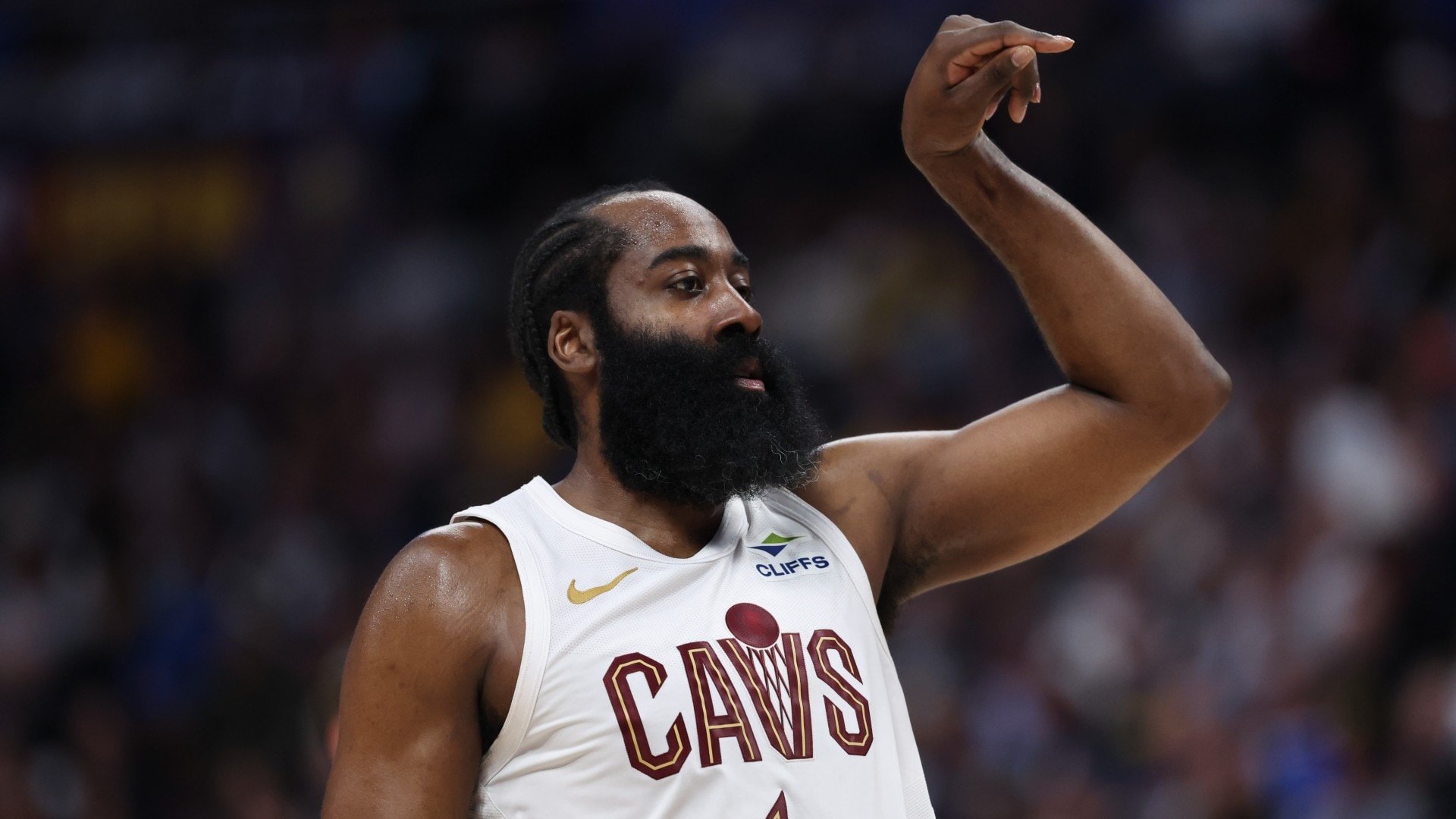
James Harden has officially declined his $42.3 million player option with the Cleveland Cavaliers, making him a free agent despite his prior two-year, $81.5 million signing, and the market currently prices his chance of joining a new team at just 1% [1][4]. On Polymarket, this conditional token contract trades on the Polygon network using USDC, where the 1% price reflects the overwhelming on-chain consensus that he will either re-sign with Cleveland or resolve to "Other" rather than join a listed third option [2][3]. The pricing mechanism here captures the immediate reality that his opt-out was a strategic move to aid the Cavaliers' flexibility in pursuing LeBron James, not a genuine bid to test the open market [6][7].
Historically, veteran stars who opt out to facilitate a team's bigger acquisition often return to the same club on a restructured deal, mirroring how the Cavaliers are predicted to re-sign Harden at $66.6 million over two years starting at $32.5 million [2]. Comparable cases in recent NBA history show that players who decline options for team flexibility rarely secure new contracts elsewhere before the settlement window closes, as the original team retains leverage to match any offer or re-negotiate internally [4]. This precedent frames the 1% probability not as an error, but as a rational assessment that the "next team" will likely be Cleveland again, or the market will resolve to "Other" if he retires or stays unsigned [6].
Traders should monitor official signing announcements from the Cavaliers, which can only be confirmed after 12:01 ET on July 6, and watch for any sudden shifts in the negotiation timeline for LeBron James that might alter Harden's destination [3]. Recent reports from Shams Charania indicate the sides are already working through a new multi-year deal, suggesting the "next team" is effectively predetermined as Cleveland unless the LeBron pursuit fails and Harden seeks a fresh challenge [1]. The key dependency is whether the Cavaliers successfully sign LeBron; if that fails, Harden might explore other options, though the current market data suggests this outcome remains a low-probability tail event [1][7].
Methodology
Methodologically we separate two layers: the live probability (Polymarket mid-price) and the platform attributes (fee, KYC, settlement currency, payment rails). That keeps the comparison honest — a single canonical probability across the row, with the venue-by-venue trade-offs spelt out in the columns next to it.
Resolution & payout
Settlement runs on-chain. Polymarket's contract logic separates YES and NO shares as conditional tokens; at resolution the winning share lifts to $1.00 and the losing one to $0. The outcome input comes from the UMA Optimistic Oracle, which secures against bad resolution with a bond + dispute window.
Once finalised, the smart contract pays USDC to the holders' wallets within minutes — no withdrawal fees beyond Polygon network gas. Kalshi settles in USD via CFTC clearance, Betfair in account currency net of commission, Manifold in play-money mana with no cash-out.
FAQ
- Is this market available outside the US?
- Polymarket itself is geo-blocked in the US/UK/EU. Always check the legal status of prediction markets in your jurisdiction before trading.
- How does resolution work?
- Through the UMA Optimistic Oracle on Polygon: a proposer submits the outcome, a two-hour challenge window opens, and USDC payouts settle automatically once the result is final.
- What's the difference between YES and NO shares?
- A YES share pays $1.00 if the event happens, $0 otherwise. A NO share pays $1.00 if the event doesn't happen. The market price between 0¢ and 100¢ is the implied probability.
- How fast are USDC deposits?
- Polygon credits deposits after 12 confirmations — usually under 30 seconds. Withdrawals follow the same path and land back in your wallet within minutes.
- Do I need to KYC for this market?
- On Polymarket directly, no — it's wallet-based. Intermediary brokers like Polymarket Qué Es trigger KYC only above $1,500 of lifetime trading volume; under that you trade pseudonymously with a single wallet address.
%22%2F%3E%3Cpath%20d%3D%22M%206%2066%20A%2026%2026%200%200%201%2058%2066%22%20fill%3D%22%23E6B98D%22%20opacity%3D%220.9%22%2F%3E%3Ccircle%20cx%3D%2232%22%20cy%3D%2226%22%20r%3D%2222%22%20fill%3D%22%23F5CBA7%22%2F%3E%3Cpolygon%20points%3D%2216%2C18%2020%2C4%2024%2C18%22%20fill%3D%22%2354a9eb%22%2F%3E%3Cpolygon%20points%3D%2224%2C18%2028%2C3%2032%2C18%22%20fill%3D%22%2354a9eb%22%2F%3E%3Cpolygon%20points%3D%2232%2C18%2036%2C3%2040%2C18%22%20fill%3D%22%2354a9eb%22%2F%3E%3Cpolygon%20points%3D%2240%2C18%2044%2C4%2048%2C18%22%20fill%3D%22%2354a9eb%22%2F%3E%3C%2Fsvg%3E) and
and%22%2F%3E%3Cpath%20d%3D%22M%206%2066%20A%2026%2026%200%200%201%2058%2066%22%20fill%3D%22%23E6B98D%22%20opacity%3D%220.9%22%2F%3E%3Ccircle%20cx%3D%2232%22%20cy%3D%2226%22%20r%3D%2222%22%20fill%3D%22%23F5CBA7%22%2F%3E%3Cpolygon%20points%3D%2216%2C18%2020%2C4%2024%2C18%22%20fill%3D%22%2354a9eb%22%2F%3E%3Cpolygon%20points%3D%2224%2C18%2028%2C3%2032%2C18%22%20fill%3D%22%2354a9eb%22%2F%3E%3Cpolygon%20points%3D%2232%2C18%2036%2C3%2040%2C18%22%20fill%3D%22%2354a9eb%22%2F%3E%3Cpolygon%20points%3D%2240%2C18%2044%2C4%2048%2C18%22%20fill%3D%22%2354a9eb%22%2F%3E%3C%2Fsvg%3E)
Trade Pronóstico: NBA Free Agency: James Harden Next Team on Polymarket Qué Es
Live order book, 0% fees, USDC settlement in seconds.
Open live market →